Flag Day 2013
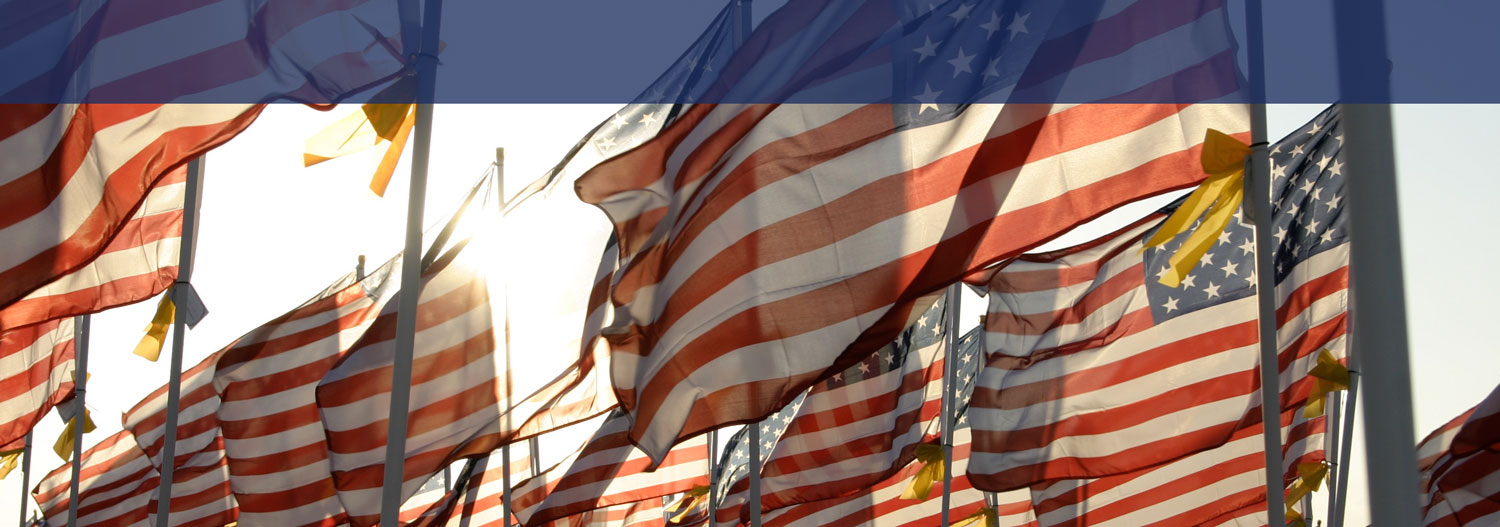
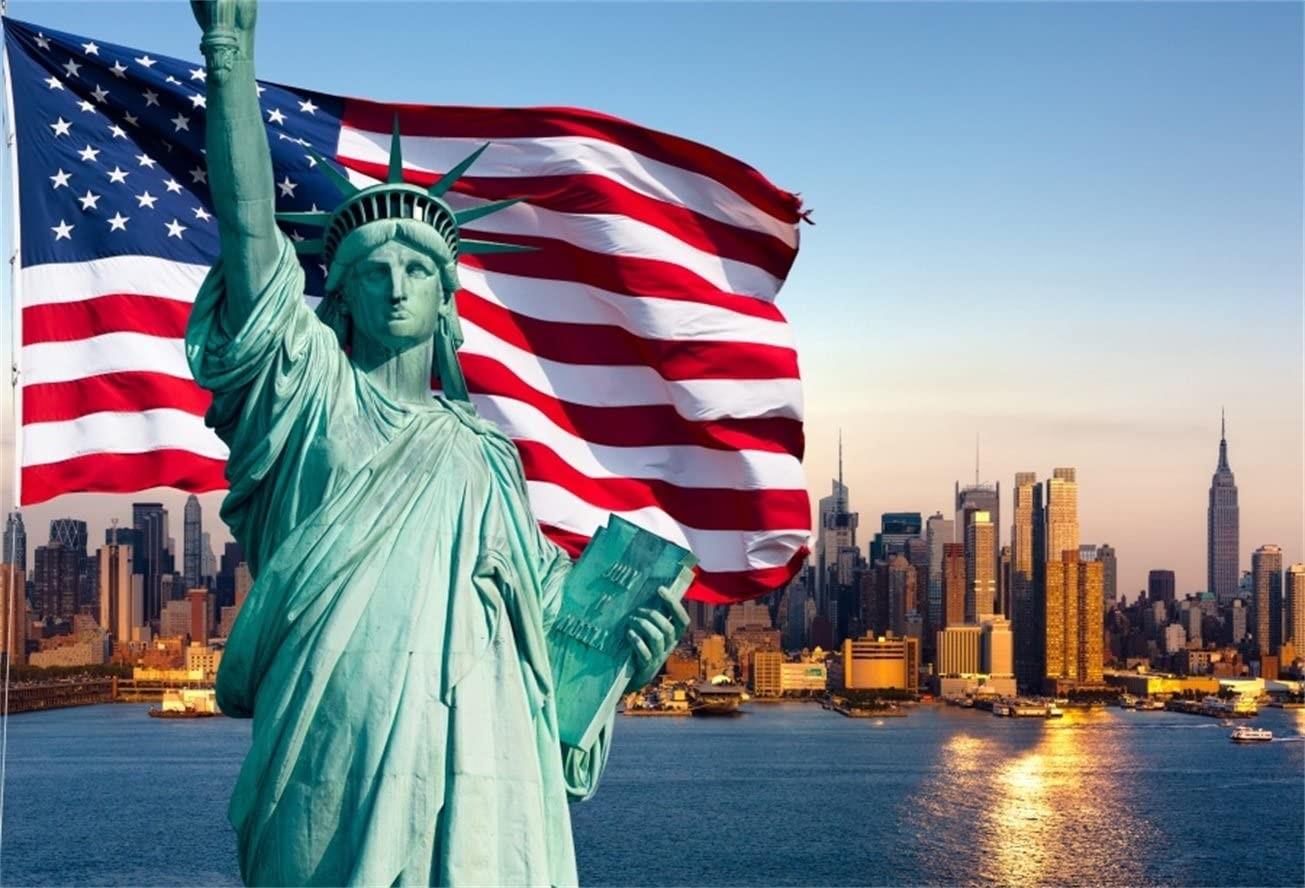
Americans celebrated last Friday, June 14th as Flag Day to honor the United States flag’s 236th birthday. The flag’s birth certificate—a resolution of the Continental Congress adopted on June 14, 1777—reads, “Resolved, That the flag of the thirteen United States be thirteen stripes, alternate red and white; that the union be thirteen stars, white in a blue field, representing a new constellation.” Today the Union of stars has grown to fifty as the flag has grown in its meaning to symbolize the shared traditions, values and aspirations of more than 300 million Americans.
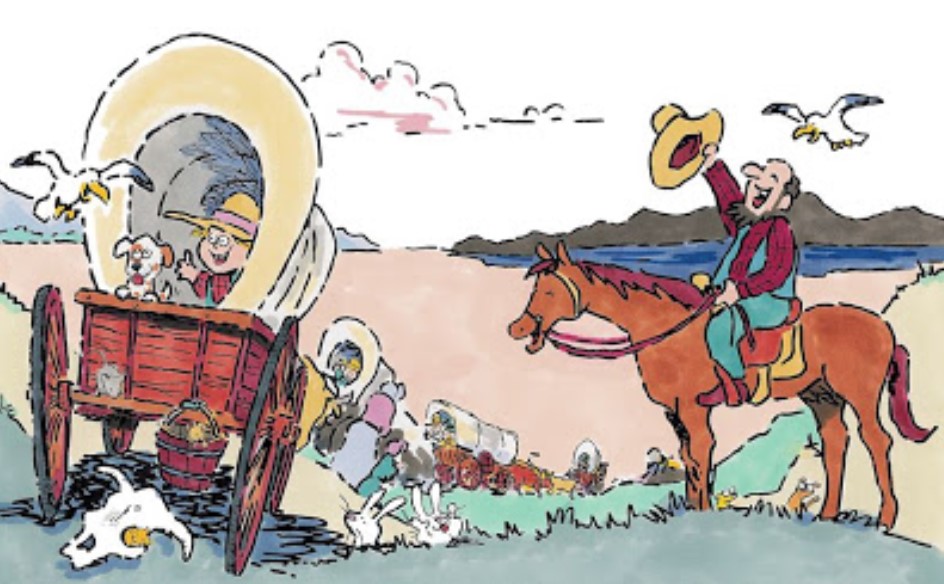
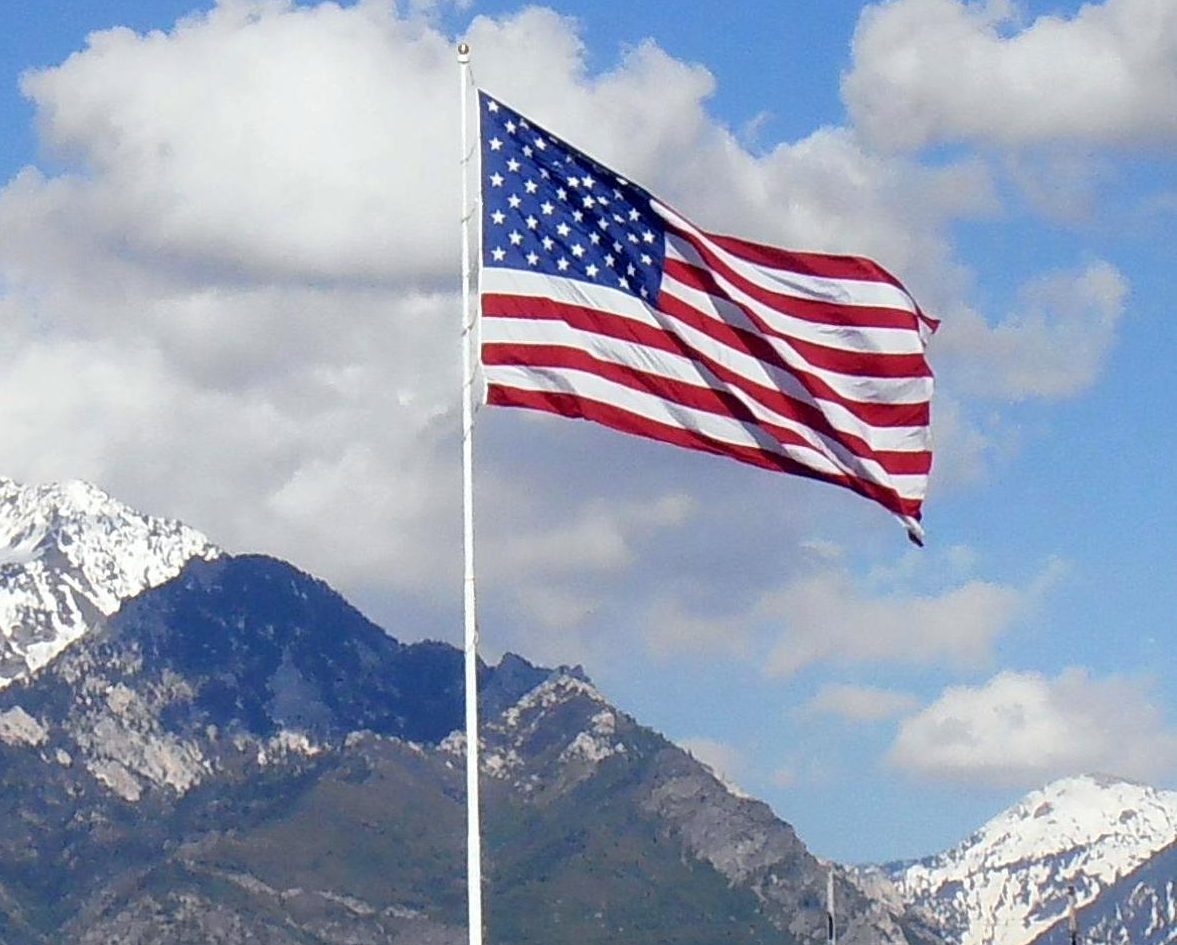
Colonial Flag Company and Challenger School’s Headquarters celebrated Flag Day by raising two big flags on two tall poles and continued a Utah tradition going back before the arrival of the pioneers. While yet underway west, Brigham Young considered raising flags in the Valley of the Great Salt Lake. Amid large mountains, Young reasoned flags measuring eight by sixteen feet would not be visible, and he concluded that a flag of thirty by ninety feet would be better.

Twin Mammoth Flags fly at Colonial Flag Company and the Challenger School Headquarters at 9400 South in Sandy, Utah.
At the first Pioneer Day Celebration held in 1849, the pioneers raised a flag sixty five feet long on a pole measuring one hundred and four feet tall, and the following year they raised an even bigger flag measuring thirty by eighty feet. These and other early large flags were christened mammoth flags, and they did show these men and women had a big interest in flags or perhaps better said an interest in big flags.
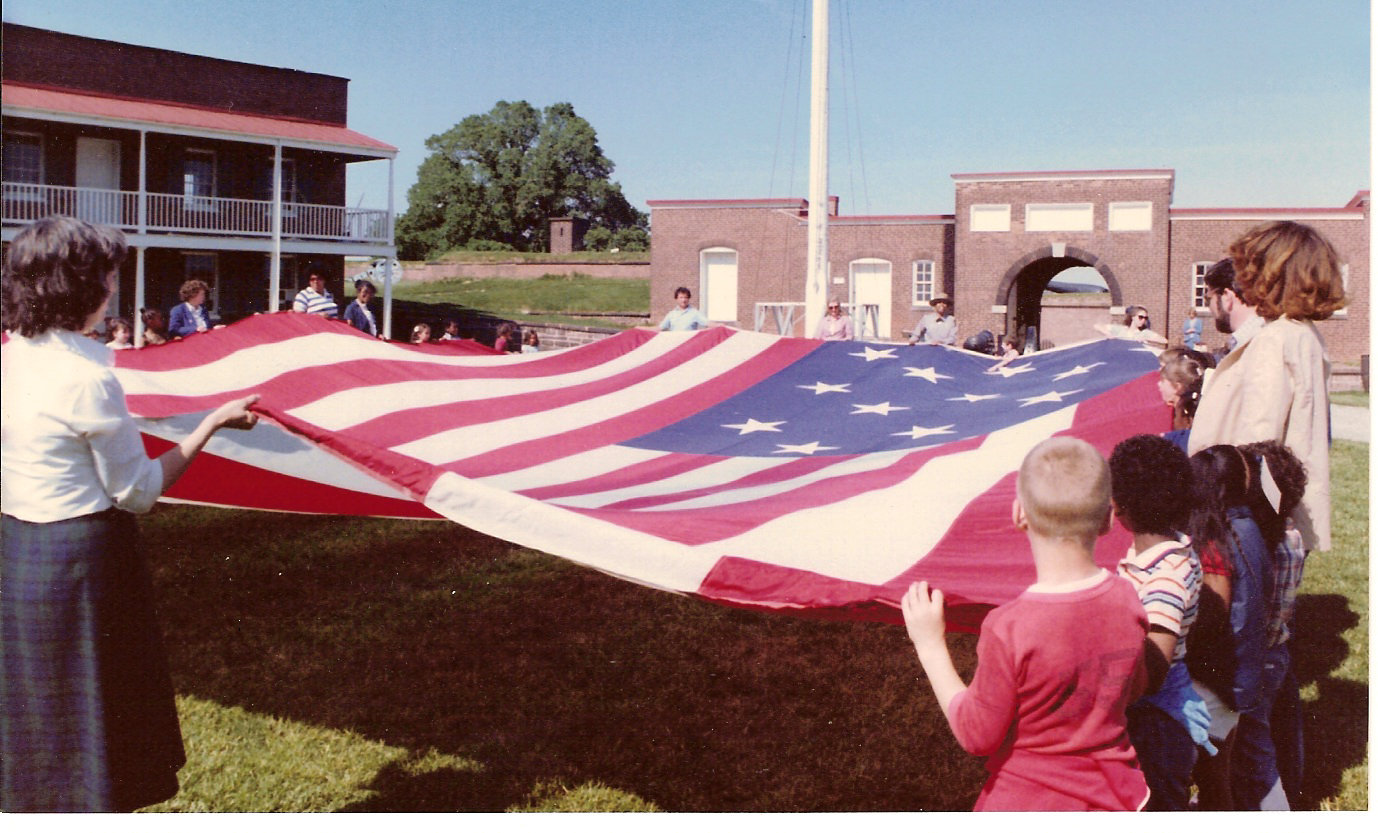
After almost fifty years, Utah was finally admitted to the Union in 1896, and to celebrate the citizenry made another mammoth flag. This time the flag measured a gigantic seventy-four by one hundred and thirty-two feet, too large for even the largest available flagpole. With stripes six feet wide and a Union of forty-five stars measuring forty feet square, this Stars and Stripes was at the time the largest flag in the world. It covered the ceiling of the Salt Lake Tabernacle stretching from the massive organ pipes on the west of the building all the way to the balcony above the east entrances. A year and a half later, this mammoth statehood flag was reused to celebrate the fiftieth anniversary of the pioneer’s arrival on the shores of the Great Salt Lake. Still too big for any pole, it was hung to cover the south wall of the Salt Lake Temple. Stretching from the towers on the east to the towers on the west the huge flag had to be draped slightly to fit.

The dimensions of the gigantic Forty-five Star Flag made for Utah’s Admission to the Union in 1896 are shown on this chart.
What of the tradition of the Mammoth Statehood flag? Colonial Flag has also continued this tradition of gigantic flags by sewing flags measuring one hundred and fifty feet by three hundred feet. Flags too large for the ceiling of the Tabernacle and also too large to be hung on the south wall of the Salt Lake Temple, but just the right size to cover an entire football field. On the tenth anniversary of the 9/11 terrorist attacks, all NFL football games began with the display of these stadium size flags in six football stadiums around the country. All six of these flags were sewn right here in Sandy.
Colonial Flag Company therefore continues and adds to Utah’s tradition, and Challenger School with its new tall pole and big flag joins in advancing the tradition. Barbara Baker, Challenger School’s late founder, had a love for large flags flying on tall flagpoles. She wanted a pole and flag as big as Colonial’s, or if possible bigger. “Challenger school proudly displays the flag of the United States of America,” explains Challenger CEO , Hugh Gourgeon, “because it is the symbol of the first and only republic founded upon the principle that the sole just purpose of government is the protection of individual rights.”
Two tall poles—each one a hundred and ten feet high—and two mammoth flags—thirty by sixty feet. Challenger School and Colonial Flag joined together to celebrate Flag Day and to continue the Utah Tradition of tall poles and big flags.
June 17, 2013 No Comments
Three Cheer for the BLUE, White & Red
The Flag of the United States evolved from banners which had designs rooted in Europe but molded by the traditions of the New World. The colors of the flag are those of Great Britain, the Mother Country of the thirteen American Colonies, and at the beginning of the rebellion against Great Britain’s Parliament the colonists still saw themselves as British. When Paul Revere spread the alarm of approaching troops, he did not call out, “The British are coming!” The New England colonists were fighting for their rights and British men and women. So, Revere would have warned that, “The Redcoats or Coming!” or perhaps “The Lobster Backs are coming!” Both terms were derogatory nicknames of the British troops that occupied Boston.
In the natural evolution from the British Red Ensign to the Stars and Stripes, the colors red, white and blue became the colors of the new nation. Nevertheless, the colors did not have any specific meaning for Americans when in 1777 they flag adopted their new flag
In 1782 Congress adopted a new national seal and coat of arms displaying and eagle with a shield on its breast fashioned after the Stars and Stripes. The new Great Seal of the United States therefore used the colors red, white and blue in its design. Charles Thomson, the secretary of the Congress wrote a short description of the Great Seal and explained the meaning of the colors as used in that design.
“White signifies purity and innocence, Red, hardiness & valour, and Blue . . . signifies vigilance, perseverance & justice.”
However, what is the correct order of the colors? We are accustomed to saying, “red, white & blue.” Strangely, one man strongly insisted that we should say, “the blue, white & red.” Gridley Adams, a man who considered himself the finial expect on all issues surrounding the flag, believed that Thomas á Becket, a British song writer and performer, mixed the order up when he wrote the song, “Columbia, the Gem of the of the Ocean.” The chorus proclaims, “Tree cheers for the red, white, and blue.” Adams argued that blue is the most important color of the flag since the union of stars is found in the blue field in the upper corner next to the flag staff. For the fanatical Adams, the colors should always be listed as the blue, white and red. Also Adams dictated that when arranged in colored stripes of bunting for patriotic decoration, blue should always be at the top with red at the bottom the two colors separated by a stripe of white. Alas, while some American may agree to place blue at the top, our national colors are recited using the words of the song, “Three cheers for the red, white, and blue.”
June 5, 2013 No Comments
One flag, One life, A Million Thanks

Three hundred and sixty-four flags posted before Utah’s State Capitol, one flag for each of Utah’s Vietnam War dead.
Utah remembers it’s heroes
On Armed Forces Day last Saturday, Utahns gathered at the State Capitol to honor Utahns who fought and who died on the battlefields of Vietnam. This being the fiftieth anniversary year of the beginning of the Vietnam War, special recognition for Utah’s Vietnam veterans appeared both appropriate and needed. We talked about this in a previous post, Armed Forces Day at Utah’s Capitol.
Governor Gary Herbert spoke to those gathered in the Capitol’s rotunda before moving to the Gold Room, the Capitol’s formal reception room, where he signed legislation impacting Utah’s veteran community. The first measure the Governor signed recognized 2013 as the fiftieth anniversary of the Vietnam War’s commencement.
After the legislation signing, the Governor joined hundreds of Utahns gathered around the Utah Vietnam Veterans Memorial located on the west lawn of the Capitol grounds where Colonial Flag Foundation had posted a formation of 364 U.S. flags to honor each Utahn killed in the Vietnam War. The display echoed the day’s motto, “One flag, one life, a million thanks.” Of course, it is not only the lives lost that we remember, but the impact each death had on family, associates and friends. The sacrifice was great and far reaching. After participants observed a moment of silence, taps sounded bringing the ceremony to a close.

Utah’s service men and women return home from deployment are often greeted by a street lined with the Stars & Stripes.
Honoring veterans is something Colonial Flag does regularly and not just through the Healing Field® and Field of Honor® flag display programs. While these events scheduled all around the country each year, by themselves are significant, Colonial routinely assists families and friends of Utah’s returning service men and women by helping decorate streets with welcoming U.S. flags. These occasions are happy when military members return home at the end of deployment to the embrace of family and friends. At other somber times, the flag lined street honors Utahn who sacrificed their lives in the service of our nation. The service and sacrifice of all these Utahns honors the flag, and the flag fittingly honors them in return. Brave men and women have carried the flag into battle and the Stars & Stripes welcomes them on their return home.
Amid controversy and demonstrations, America’s veterans of the Vietnam War returned home without receiving the welcome and thanks traditionally given to the men and women who have served our nation in tie of war. The gatherings at Utah’s Capitol and Vietnam Veterans Memorial aimed to correct that lapse. Colonial Flag Company and Colonial Flag Foundation are working together to make sure that we, as a nation, do not repeat this error. Whether the service was half a century ago in Southeast Asia or yesterday in the Mideast, the men and women who serve in our armed forces deserve our welcome and thanks.
May 22, 2013 No Comments